arrow

Help Protect Your Community: Join Our Gunshot Alert Workshop

Are you concerned about the rising number of gunshots in the Quail Creek and Jamestown neighborhoods? We’re on a mission to bring free sound detection technology to your household that will share the location of gunfire via immediate alerts to your phone. A minimum number of households will be required to participate in order for the system to work. We need you!

Help Protect Your Community: Join Our Gunshot Alert Workshop

Are you concerned about the rising number of gunshots in the Quail Creek and Jamestown neighborhoods? We’re on a mission to bring free sound detection technology to your household that will share the location of gunfire via immediate alerts to your phone. A minimum number of households will be required to participate in order for the system to work. We need you!

Stay Informed

Enter your information to get important updates on the workshop and the progress of the project.

Stay Informed

Enter your information to get important updates on the workshop and the progress of the project.

What's This All About?

We are a part of a national grant program to solicit feedback and work with members of the community on the creation of a community-led gunshot alert system.  With your help, we can secure a $1 million grant to implement it in our neighborhood.  Here is how you can help!

How Can You Help?

Take the Survey

By taking an anonymous survey, you help us understand the needs and concerns of the community and provide us with crucial information in preparing for a $1 million grant to create and pilot the acoustic detection system.

Attend the Workshop

At the workshop, you'll receive a detailed review of the technology and its application. Residents will play a big part in defining the final guidelines for the system and its usage.

Show Your Interest

Get involved and show your interest in hosting a FREE acoustic detection device. Your participation is essential to meet the minimum number of households needed for the system to function effectively.

Be Part of the Solution!

By joining the project, you help create a system where gunfire alerts are accurately communicated across the neighborhood, empowering community members to respond swiftly and share gunshot locations with the Austin Police Department. You’ll help outline a proposal that provides the most benefit and value to the community in order to be effective and drive change.


Together, we can make Quail Creek and Jamestown neighborhoods safer for everyone.

Meeting Agenda & Speakers

Frequently Asked Questions

Advanced Acoustic Sensors: A network of audio sensors will be placed externally on the homes of volunteers throughout the neighborhood. These sensors are  specifically tuned to detect the sound of any gunshots perhaps due to accidental discharges, domestic disputes, drive-by shootings, robberies, or celebratory gunfire.

Real-Time Alerts: When a gunshot is detected, residents who have opted-in will be sent immediate alerts via special app notifications with the location of the gunshot.

Accurate Pinpointing: By triangulating the sound, the system will pinpoint the location of the gunfire, providing valuable location information to residents which can then be reported to the Austin Police Department.

We are developing a cutting-edge system that leverages proven, existing technology to enhance community safety. Tailored to our neighborhood’s unique requirements, we seek to create a system that ensures effectiveness and ease of use. Leveraging a National Science Foundation grant, we aim to provide this system at no cost to the community.

This system is designed as a low-cost, community-based option that can affordably cover large areas due to its inherent crowd-sourced scaling potential. Since residents opt into the system willingly and receive alerts directly, a sense of ownership and control may result in more favorable attitudes.

Participants receive real-time data directly through the system, giving them immediate access to important information. By engaging with the project, they will also have the opportunity to shape how the data is used, influencing the actions taken to improve community safety.

Gunfire has become a growing concern in the Quail Creek and Jamestown neighborhoods in recent years, with these areas experiencing an increase in incidents involving firearms, but little to no evidence pointing to the source of this increase. Community members have expressed concerns about their safety, leading to initiatives aimed at improving public security, such as the implementation of gunshot detection technology and increased law enforcement efforts. Unfortunately, existing automated solutions are prohibitively expensive, and community members feel excluded from being part of the solution, feeling rather that solutions are forced upon them without their knowledge, consent, or a voice in the matter. This project came about as a means of addressing unsanctioned gunfire while placing the concerns and needs of the community at the forefront of the response.

NACA is a part of the grant project called “Community-based Gunshot Alert System,” a Stage-1 grant funded by the National Science Foundation (NSF) under their Civic Innovation Challenge (CIVIC) program, and is responsible for the community outreach portion of the program. The grant seeks to address the problem of illegal gunfire in our neighborhood. 

This grant project is led by researchers from Vanderbilt University, in collaboration with the University of Pennsylvania, and Texas State University. The goal of this Stage-1 grant is to understand community needs and concerns and develop a plan for how the technology might be implemented.

Attend the Workshop: This is the best way to get detailed information and ask questions directly.

Visit the Grant Website: The National Science Foundation’s website has much more in-depth information about the grant.

Contact NACA Directly: You can reach out to NACA through the different channels on the contact page.

Fireworks and celebratory gunfire tend to occur around the same times, such as holidays, New Year’s Eve, or significant local celebrations, making it more difficult to distinguish between them.

Fireworks can mask the sound of gunfire, potentially leading some individuals to feel emboldened to discharge firearms, believing they won’t be easily detected. Celebratory gunfire could also be influenced by other factors, such as increased access to firearms, social norms in certain areas, or a lack of awareness about the dangers and legal consequences of firing guns into the air.

The sensors will detect the acoustic differences between fireworks and celebratory gunfire, and the effectiveness of the alerts will be evaluated during the project.

One of the goals of the workshop is to decide, as a community, how this information will be used.  Here are a few possibilities.

  • Rapid Response: When the system detects a gunshot, it immediately alerts the community with an approximate location within a block radius. Exact locations will not be provided due to privacy concerns. This allows for more precise reporting from the community, and faster response times from law enforcement, which can be crucial in preventing further harm or apprehending suspects.

  • Evidence Collection:
    The recorded audio can be used as evidence in criminal investigations. It can help to corroborate witness statements, identify suspects, and reconstruct the events leading up to the shooting.

  • Crime Analysis:
    Law enforcement agencies can analyze patterns in gunshot incidents over time. This can help them identify hotspots, identify potential suspects or groups involved in criminal activity, and allocate resources more effectively.

  • Community Policing:
    The system can be used as a tool for community policing. By sharing information about gunshot incidents with residents, law enforcement can foster trust and collaboration with the community, leading to increased public safety.

Yes, gunshot alert systems are generally safe and reliable. Here’s why:

  • Advanced Technology: These systems use sophisticated acoustic sensors that are designed to accurately detect the sound of gunshots while minimizing false alarms.

  • Regular Testing:
    The systems are regularly tested and calibrated to ensure their accuracy and reliability.
  •  
  • Low Maintenance: They typically require minimal maintenance and can operate for extended periods without issues.
  •  
  • Privacy Considerations: While the acoustic sensors are continuously monitoring for gunshots, no ongoing audio recordings are being made, and neither the researchers nor law enforcement personnel will have access to live audio streams that could be misused for eavesdropping purposes.

However, it’s important to note that no system is completely foolproof. There may be rare instances where the system fails to detect a gunshot or triggers a false alarm. To address these potential issues, it’s crucial to have a well-defined response plan in place and to continuously monitor and improve the system’s performance.

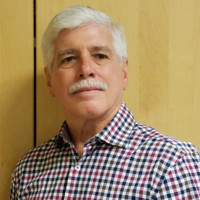
Randy Teich

Welcome Remarks

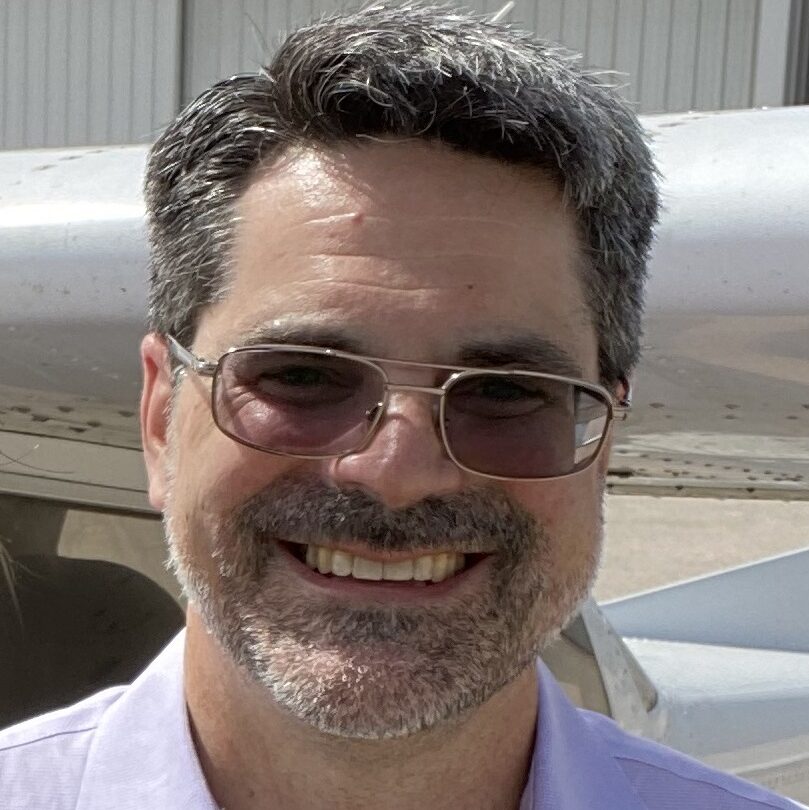
Brian La Cour

Program Introduction

Kathleen Padilla

Survey Analysis

Will Hedgecock

Community-Based Gunshot Alert System

Lieutenant Fausto Rodriguez

APD Discussion

Councilmember
Chito Vela

D4 Perspective

Panel Discussion

Open Q&A

Join the Movement to Make Your Neighborhood Safer.

By supporting this gunshot alert system, you’re taking a proactive step to protect your community. Together, we can create a safer and more peaceful environment for everyone.

Stay Informed

Enter your information to get important updates on the workshop and the progress of the project.